

In this guide
Start with your address, not a bin colour
To sort waste in Denmark, find the collection point for your home, read its labels and check your municipality’s instructions. You do not need to memorise every unusual item on your first day. Start with everyday waste and look up exceptions as they arise.
Your bins may be in a shared courtyard, a basement waste room, outside a house or at an assigned collection point in the street. Ask your landlord, caretaker or building manager which facilities belong to your address and whether you need a key or access code.
Denmark has common sorting criteria, but municipalities organise collection locally. Advice from a friend in another town can help you understand the system without necessarily describing the bags, bins or services available at your home.
Ten categories do not mean ten kitchen bins
Denmark’s household sorting system covers food waste, paper, cardboard, glass, metal, plastic, food and drink cartons, textile waste, hazardous waste and residual waste. Electronics and batteries also require separate handling; they should not be treated as ordinary residual waste simply because they are outside that list.
Each of these ten waste categories has its own national pictogram. Look for these symbols on bins and collection points to see what belongs there.
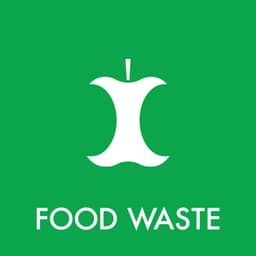
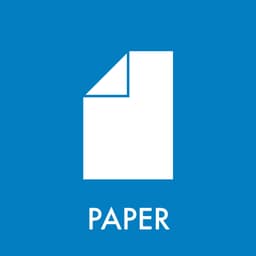
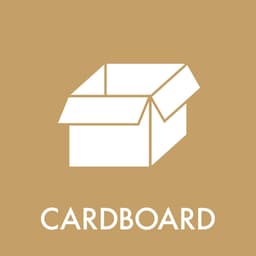
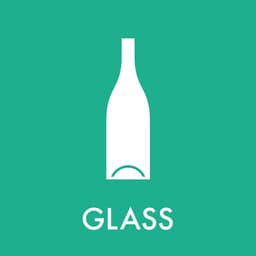
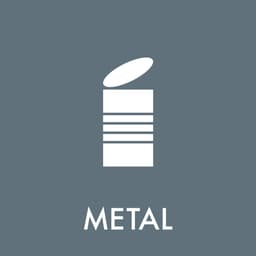
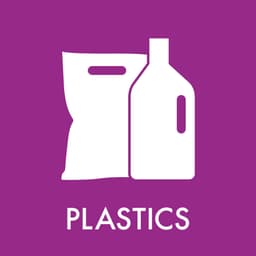

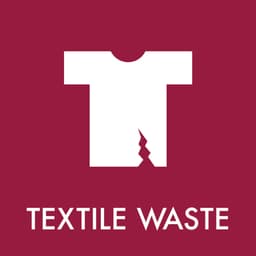
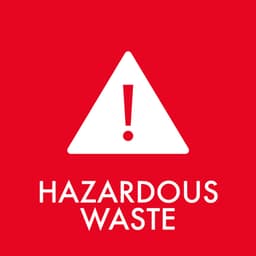
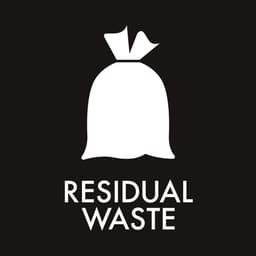
Some materials may be collected together for later separation. A container labelled for both plastic and food and drink cartons is therefore not necessarily a mistake. Follow the labels on the correct opening or compartment rather than assuming the whole container accepts everything shown somewhere on it.
You also do not need ten large containers inside a small flat. You could keep food waste and residual waste in separate kitchen bins, collect dry recyclables in a divided box and take them out regularly. Keep batteries and hazardous products safely separate while you find the correct collection arrangement.
If you’re unsure where an item belongs, look it up in the Mit Affald sorting guide or in the Affaldsguide Danmark app, which is available in english.
Learn the Danish words you will see most often
These labels are useful even if you use an English-language sorting guide:
 Madaffald: food waste, such as food scraps and leftovers without their packaging.
 Restaffald: residual waste that does not belong in recycling or another special collection.
 Papir: paper, including newspapers and ordinary writing paper.
 Pap: cardboard, such as boxes and cardboard tubes.
 Glas: glass accepted by the local glass collection, including empty food jars and non-deposit bottles.
 Metal: accepted metal packaging and small metal items.
 Plast: accepted plastic waste, including many everyday packaging items.
 Mad- og drikkekartoner: food and drink cartons, such as milk and juice cartons.
 Tekstilaffald: worn-out textiles that are unsuitable for reuse and meet the collection requirements.
 Farligt affald: hazardous waste, which needs a dedicated collection or drop-off route.
Do not put a milk carton in ordinary cardboard just because it contains paper fibres. Likewise, a ceramic mug is not a glass bottle, and an electrical appliance is not ordinary metal waste just because its casing is metal.
Our guide to Danish bin labels explains the names further. You can also browse the waste categories when you need examples.
Food waste: separate the food from its packaging
Food waste is not limited to raw fruit and vegetables. Local guides also include cooked leftovers, coffee grounds, eggshells and other food scraps. Read the local instructions for less obvious items rather than assuming that everything described as natural or biodegradable belongs here.
Remove food from its packaging before disposal. A bag of expired bread contains two things to sort: the bread and its packaging. A compostable cup or plant pot is not automatically food waste either.
The bag itself needs a separate check. Copenhagen requires its supplied green biobags, but that requirement should not be extended to every municipality. Check which bags your provider accepts, how they must be closed and how to get more before buying replacements.
See our food waste guide for a closer introduction to madaffald.
Should recycling go into a bag?
Do not assume every waste category should go out in a tied rubbish bag. Odense Renovation’s sorting instructions, for example, distinguish bagged food and residual waste from loose plastic, cartons, metal, glass, paper and cardboard. Its textile collection has its own bagging and ordering arrangements.
For your home, check both the material and the collection method. If the instructions say to place recyclables loose in the bin, empty your carrying bag into the correct compartment instead of dropping a mixed, closed bag inside.
A reusable shopping bag or box can help you carry dry recycling downstairs. You can then bring it back rather than making the transport bag part of the collection.
How clean does packaging need to be?
Empty food and drink packaging and scrape out what you reasonably can. The national sorting guidance does not require plastic, metal, glass and food cartons to be completely spotless.
Copenhagen’s household guidance explicitly says these materials do not need washing or rinsing after you have emptied them as well as possible. A jar does not need to look ready for your kitchen cupboard before it can be collected for recycling.
Paper and cardboard are different: keep them clean and dry, and check the item if food or moisture has affected it. Do not use one cleaning rule for every kind of packaging. If you are unsure about a pizza box or a container you cannot empty, look it up rather than treating all similar-looking packaging alike.
Keep deposit bottles and cans for pant
Many drinks are sold with a refundable deposit called pant. The familiar Danish deposit mark identifies one-way packaging in the system. Keep those bottles and cans for a return point rather than putting them straight into household glass, metal or plastic recycling.
Dansk Retursystem also explains that some refillable bottles carry a deposit without the familiar mark. The mark is therefore a useful starting point, not a complete definition of every refundable bottle.
A deposit return is different from ordinary recycling: it is how you recover the deposit paid when buying the drink. Our guide to pant in Denmark introduces the system and return process.
Batteries and electronics need their own route
Used batteries must be collected separately, not put in residual waste. Depending on the local arrangement, small batteries may have a dedicated box, a collection point or another specified method. Do not assume that a bag on top of the bin is accepted everywhere.
Small electronics also need separate handling. Chargers, battery-powered toys and electric toothbrushes do not become ordinary plastic or metal waste when they stop working. Check the electronics collection or recycling-centre instructions.
The Danish Environmental Protection Agency advises against experimenting with a battery you cannot remove from a product. Ask the retailer for help or hand over the complete product as electronic waste. Damaged batteries need particular care; ask the receiving operator about safe delivery rather than keeping them with everyday recycling.
Reusable clothes are not textile waste
Clothes and household textiles that someone else can still use should go to reuse. Textile waste is for suitable worn-out or damaged textiles, not a replacement for donating usable clothing.
The Environmental Protection Agency says textile waste must be dry. Wet or mouldy textiles and textiles contaminated with substances such as paint or oil do not belong in that collection. Worn-out shoes, belts and bags are not automatically textile waste either.
Check the local instructions before filling a bag. A donation container and a municipal textile-waste collection can serve different purposes even when both mention clothing.
Furniture and moving boxes: do not just leave them beside the bins
A large item is not automatically accepted as bulky waste. Look for storskrald or stort indbo, and check whether collection must be booked by you or by the building’s waste manager.
For example, Aarhus directs residents to Kredsløb for bulky-waste collection, while Copenhagen distinguishes large household items from indoor wood and other separately collected materials. These are local services, not permission to leave furniture at any collection point.
Before moving in or out, ask about cardboard from packing boxes, unwanted furniture and any booking deadlines. If an item still works, consider giving it away or using an appropriate reuse service before treating it as waste.
What is a genbrugsplads?
A genbrugsplads or genbrugsstation is a recycling centre where you can deliver accepted waste sorted by type. It is different from a genbrugsbutik, which is a second-hand shop.
A smaller neighbourhood collection point, often called a nærgenbrugsstation, may accept a narrower range of items. Check the particular site before taking a sofa, appliance or hazardous product there. Read its opening hours, access conditions and sorting guidance, and ask staff where an unfamiliar item belongs.
Life in Denmark, the public information service, points residents to municipal recycling centres and local waste self-service. If you cannot find the right collection route, the municipality or its waste operator is the appropriate place to ask.
Find collection dates and build a simple routine
Use your address to find the provider’s collection calendar. Shared-bin residents may mainly need to know where to take waste, while residents with individual bins may also need to prepare them for collection.
You can check upcoming collections on this website where your municipality is supported. If your address is unavailable, use the official provider’s calendar. The app offers collection reminders and is available in Danish, English and Arabic.
A useful first-week checklist is:
- Find your assigned bins and photograph their labels.
- Ask who handles building-wide waste questions.
- Check food-waste bags and other collection requirements.
- Set aside deposit containers, batteries and reusable items separately.
- Find the official calendar and the nearest suitable recycling centre.
- Look up unfamiliar items rather than copying an overflowing or incorrectly sorted bin.
Choose your municipality in the sorting guide to see the local rules recorded there. This is an independent guide; follow your municipality’s current official instructions whenever they differ from a general example.
Sources and fact checking
Sources checked .
- Life in Denmark: Waste
- Provas: Sorting at home and English sorting guide
- City of Copenhagen: Recycling in Copenhagen
- City of Aarhus: Waste and recycling
- Odense Renovation: How to sort your waste
- Danish Environmental Protection Agency: Household sorting criteria
- City of Copenhagen: How clean should waste be?
- Dansk Retursystem: Deposit marks and amounts
- Danish Environmental Protection Agency: Batteries
- Danish Environmental Protection Agency: Electronics
- Danish Environmental Protection Agency: Sorting textiles
Mit Affald is an independent guide. Always follow your municipality’s current official instructions.
Found a mistake?
Tell us what needs correcting. Please include an official source if possible. info@simplecode.dk